
THE WORK OF D. SMITH
American Abstract Sculptural Housewife
1916 - 1975
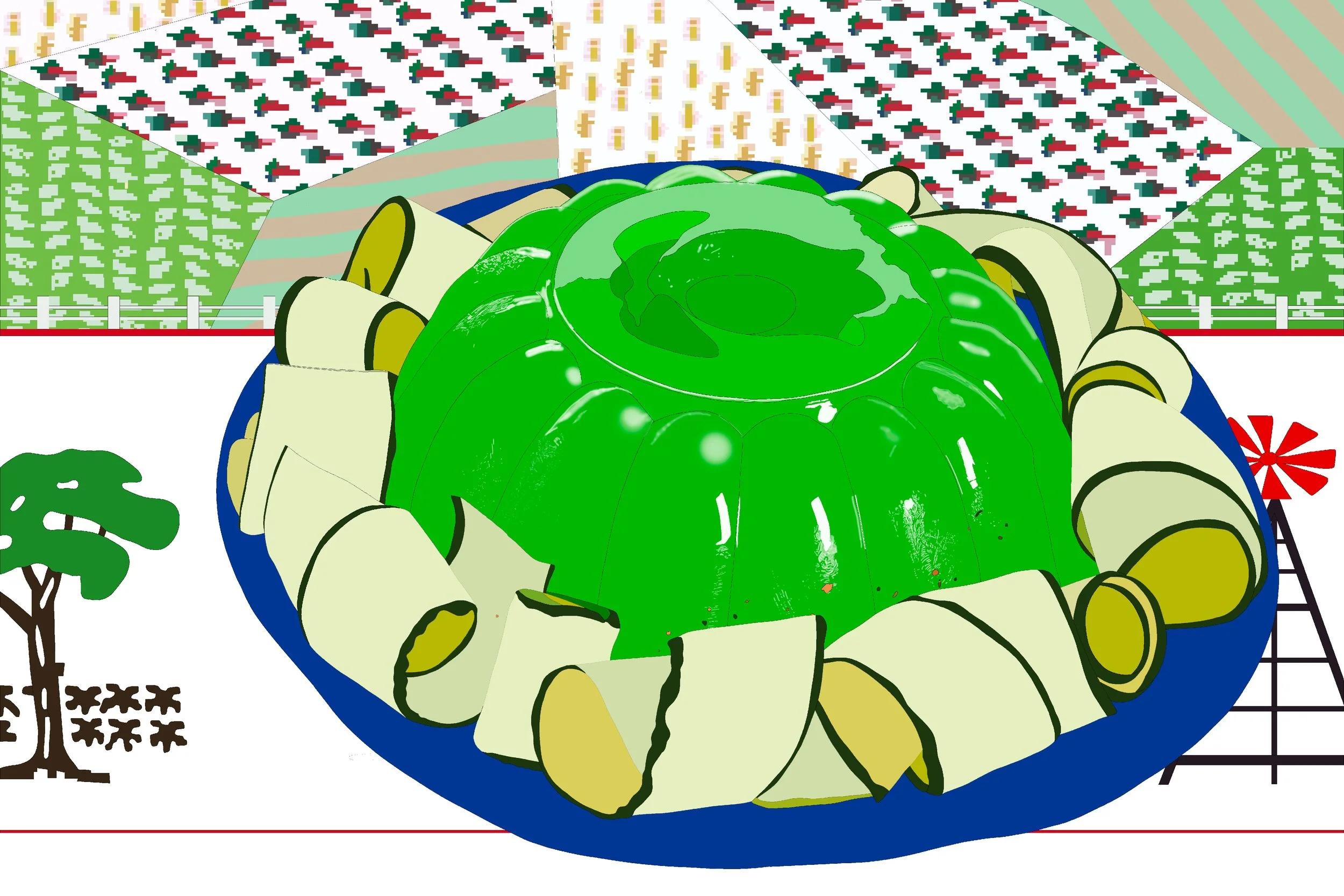
Traditionally, congealed salads meant clear gelatin which housewives produced using only fruit juice. Smith, however, made her molds with added items, mixing in pieces of fruit, vegetables, meat in much the same way that a sweeper mixed debris. Her Jello molds were always unique works. Smith had a genius for balancing void and solid, form and content, crude material and poetic spirit. And elevated congealed salads to their rightful pinnacle.
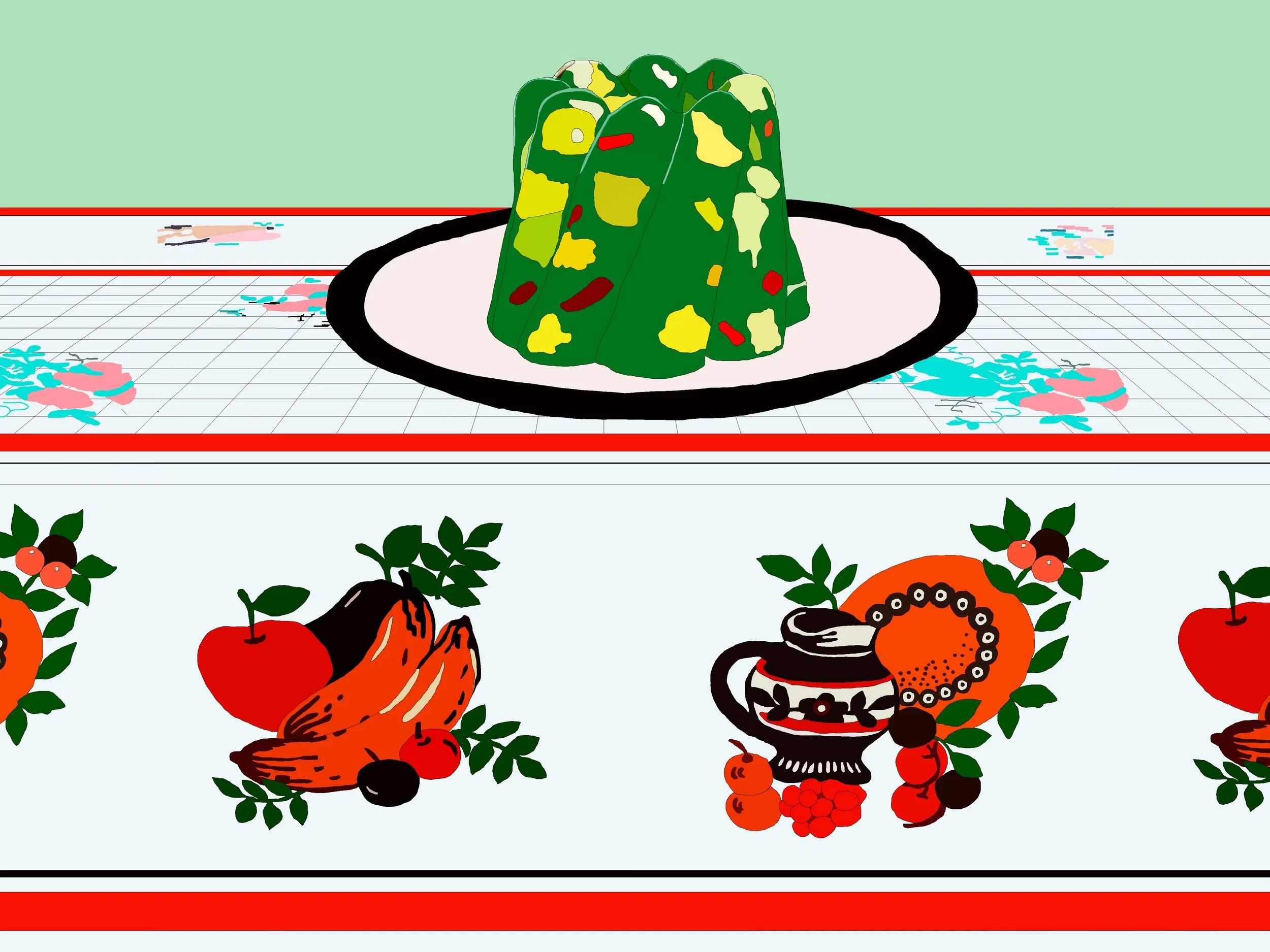
“Rosati Landing”
Marge Dean. Ink on canvas, 2026
As the US’s involvement in WWII intensified, D. Smith quickly discovered her social and political clarity through molding. In having mastered gelatin, vegetables, fruit, and protein, she knew that the materials and techniques she worked with could be made to serve with a higher purpose, namely, she could turn these materials into a substance of pacification, benevolence, and warmth. It seems from this point onward that Smith’s gelatin syntax achieves a wonderment of productivity and invention.
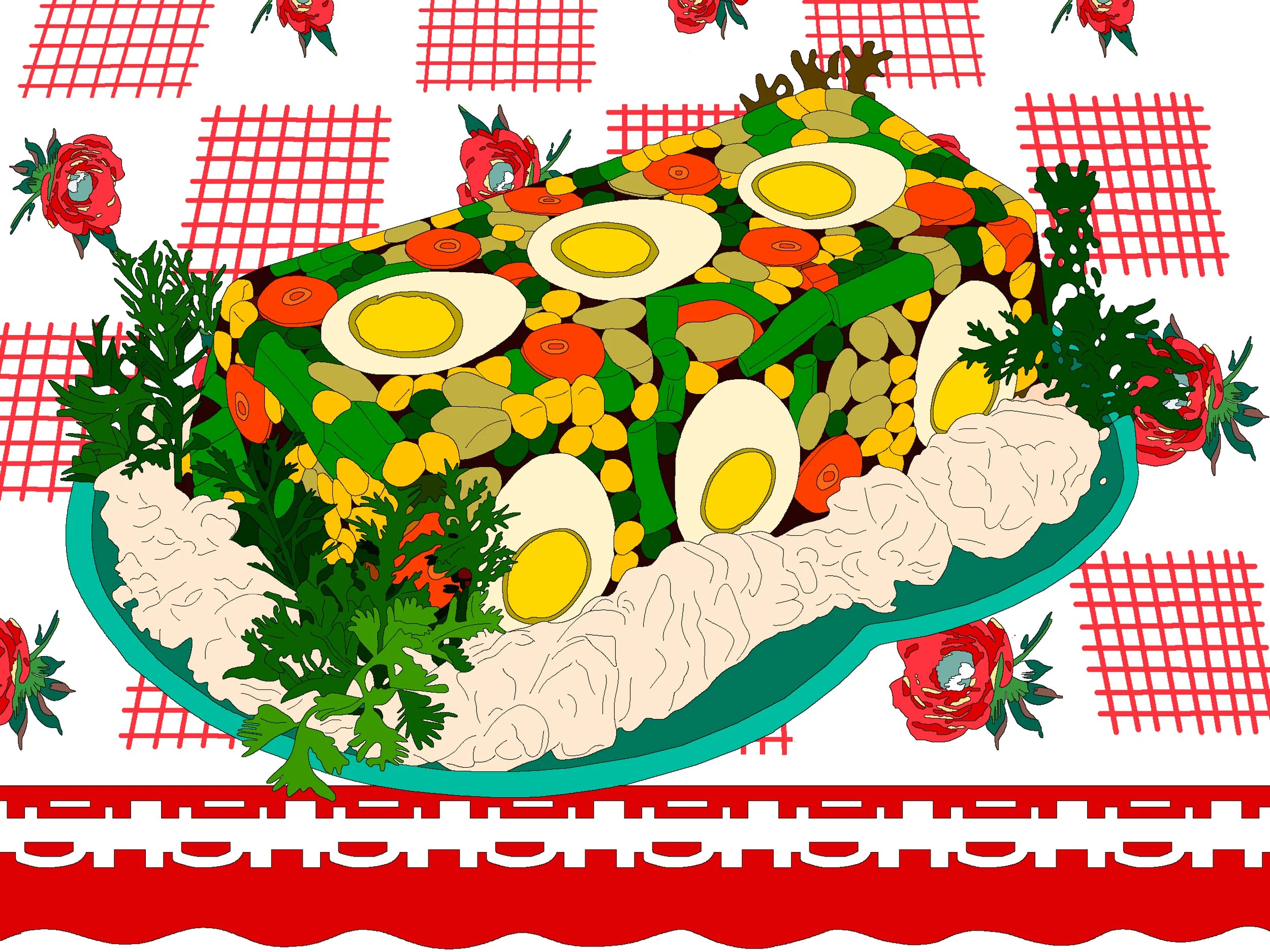
“Cubi XVIII”
Marge Dean. Ink on canvas, 2026
The Cubi series is the culmination of Smith’s Jello alchemy, in which gelatin becomes a composition of elegant yet weighty and volumetric presence, created around open spaces rather than carved from solid form. Smith’s genius for balancing void and solid, form and content, crude material and poetic spirit is the hallmark of her Cubi masterpieces. Created from 1961 until her untimely death in 1965, Smith’s Cubi congealed salads are a cohesive group – of which Cubi XXVIII was the last – whose sleek geometry allowed Smith to experiment with real rather than implied volume, exploring all its permutations.
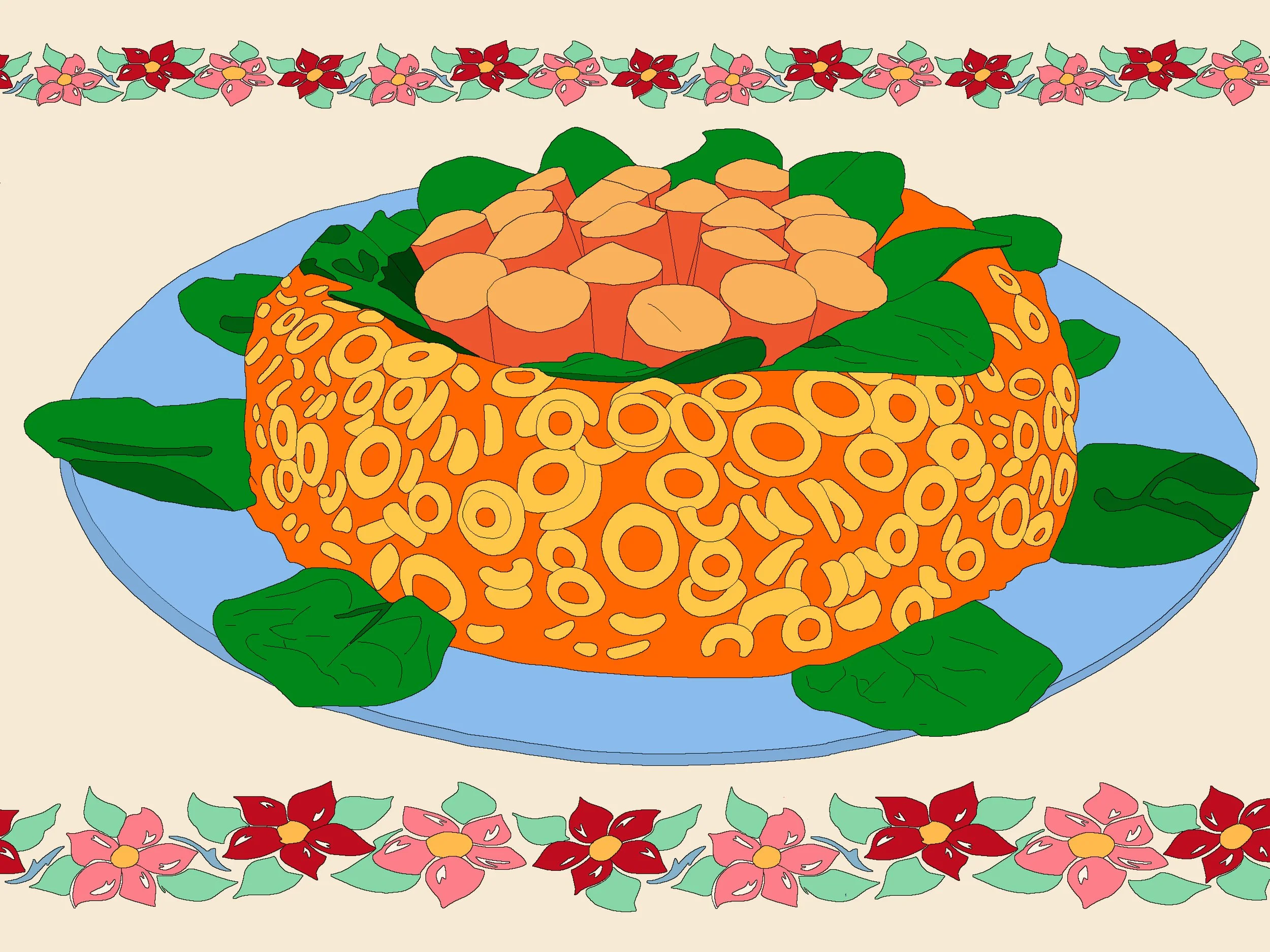
“HD XVII”
Marge Dean. Ink on canvas, 2026
‘The works you see are segments of my work life. If you prefer one work over another, it is your privilege, but it does not interest me. The work is a statement of identity, it comes from a stream, it is related to my past works, the three or four works in process and the work yet to come. I will accept your rejection, but I will not consider your criticism any more than I will concerning my life.’ —D. Smith, ‘The New Sculpture,’ 1952
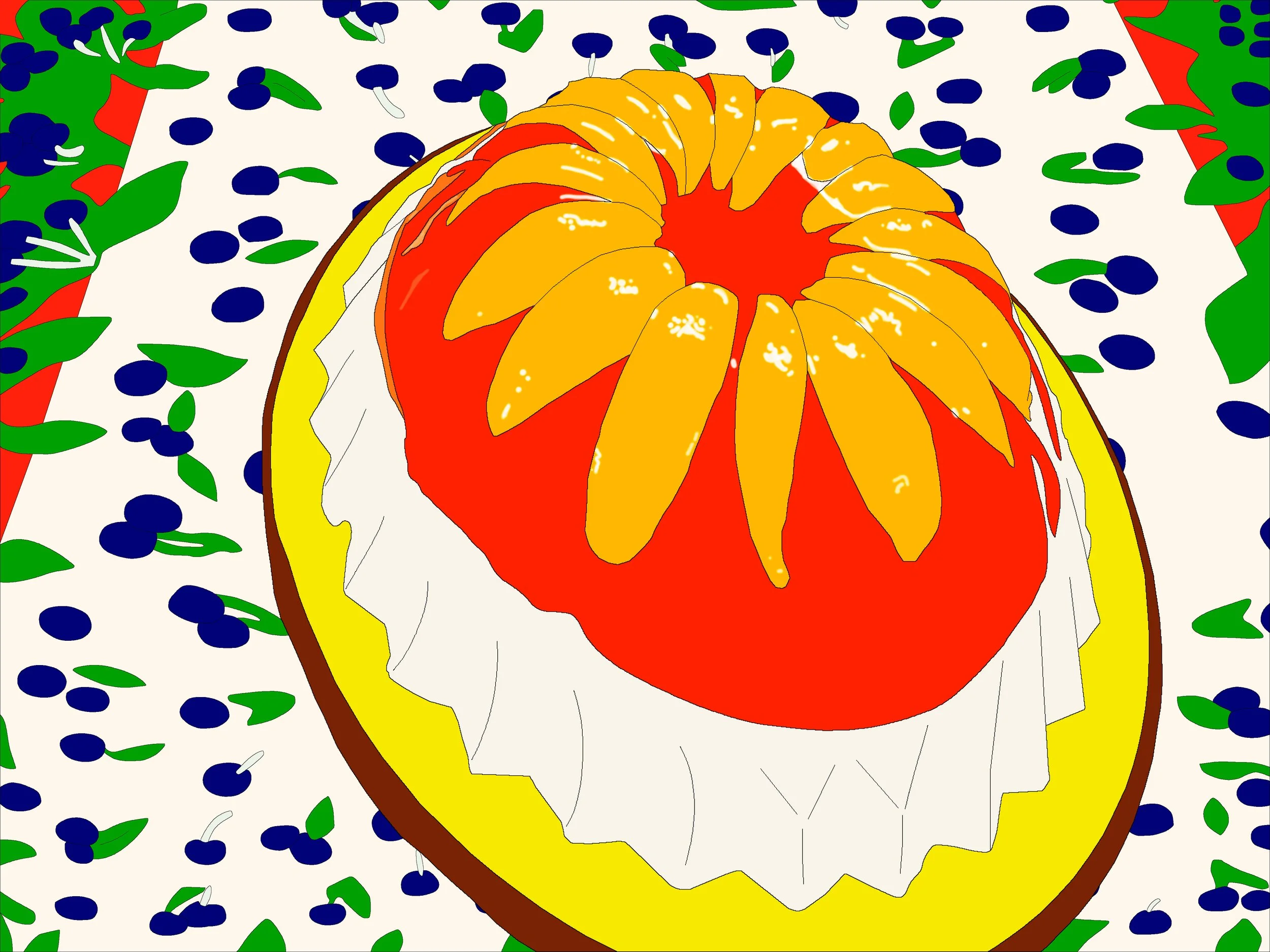
“2 Circle IV”
Marge Dean. Ink on canvas, 2026
More important was her deeply personal need to connect herself with a larger history, with deeper universal meanings, and to produce jellos that would manifest the assertion of these connections. It is considered a principle of Modernism that the past is rejected— only the new, the transgression of expectation has value. This led most housewives of the twentieth century to constantly refine their focus to the point of a singular vision. Counter to this approach, Smith had an intense need to embrace, interpret, and express a broad range of visual inspiration, and manifest her humanist belief that the history of caregiving is a continuum that she was a part of. She believed that committing as an individual to this shared human endeavor held the greatest potential for a housewife that would most deeply impact our lives.
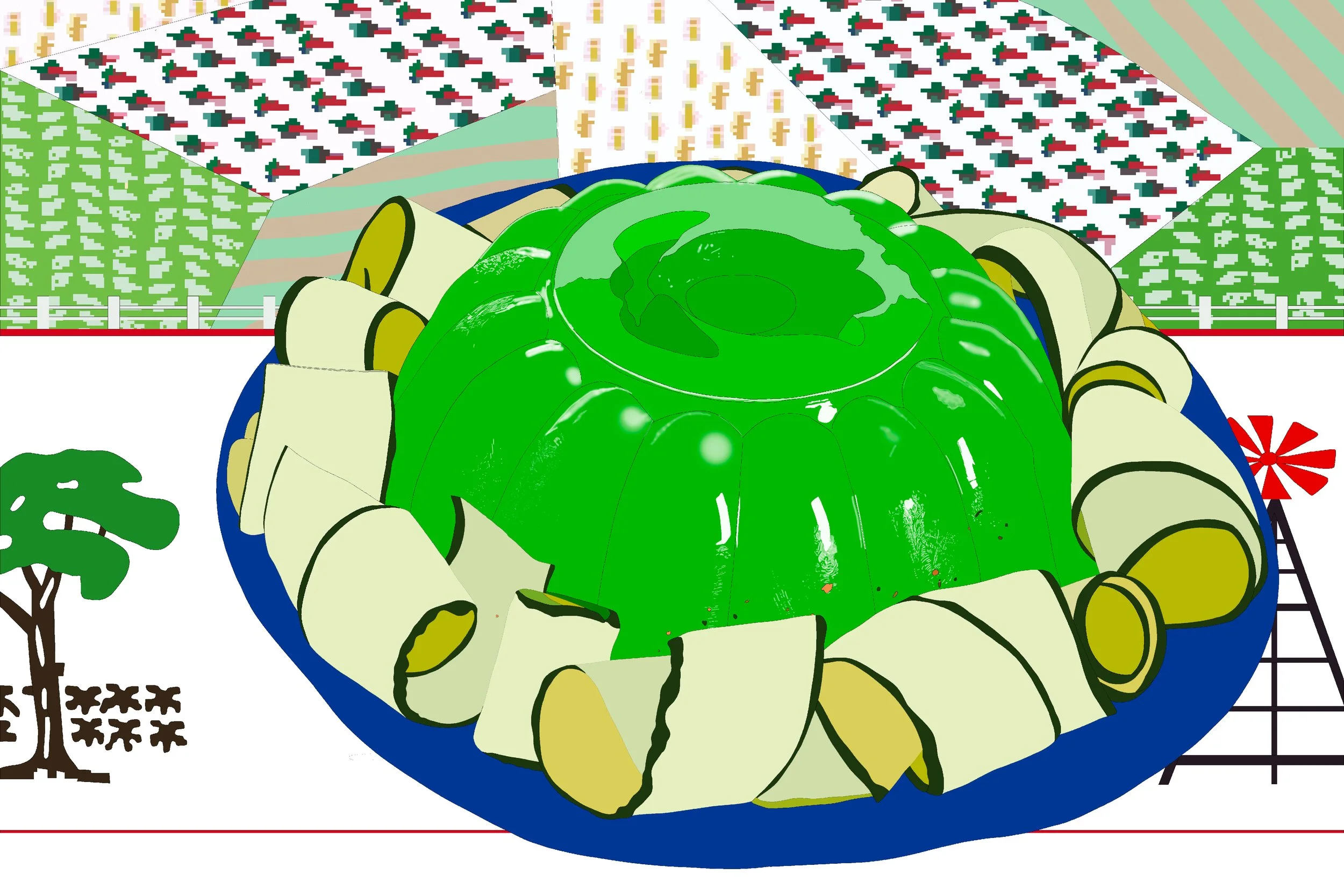
“Sacrifice”
Marge Dean. Ink on canvas, 2026
'Provincialism or coarseness or unculture is greater for creating congealed dishes than finesse or polish. Creative molding has a better chance of developing from coarseness and courage than from culture. One of the good things about American jello is that it doesn’t have the spit-and-polish that some foreign gelatins have. It is coarse; its virtue is coarseness. And a virtue can be anything, as long as that conviction projects an origin—and fresh courage. —D. Smith, ‘Memories to Myself,’ 1960
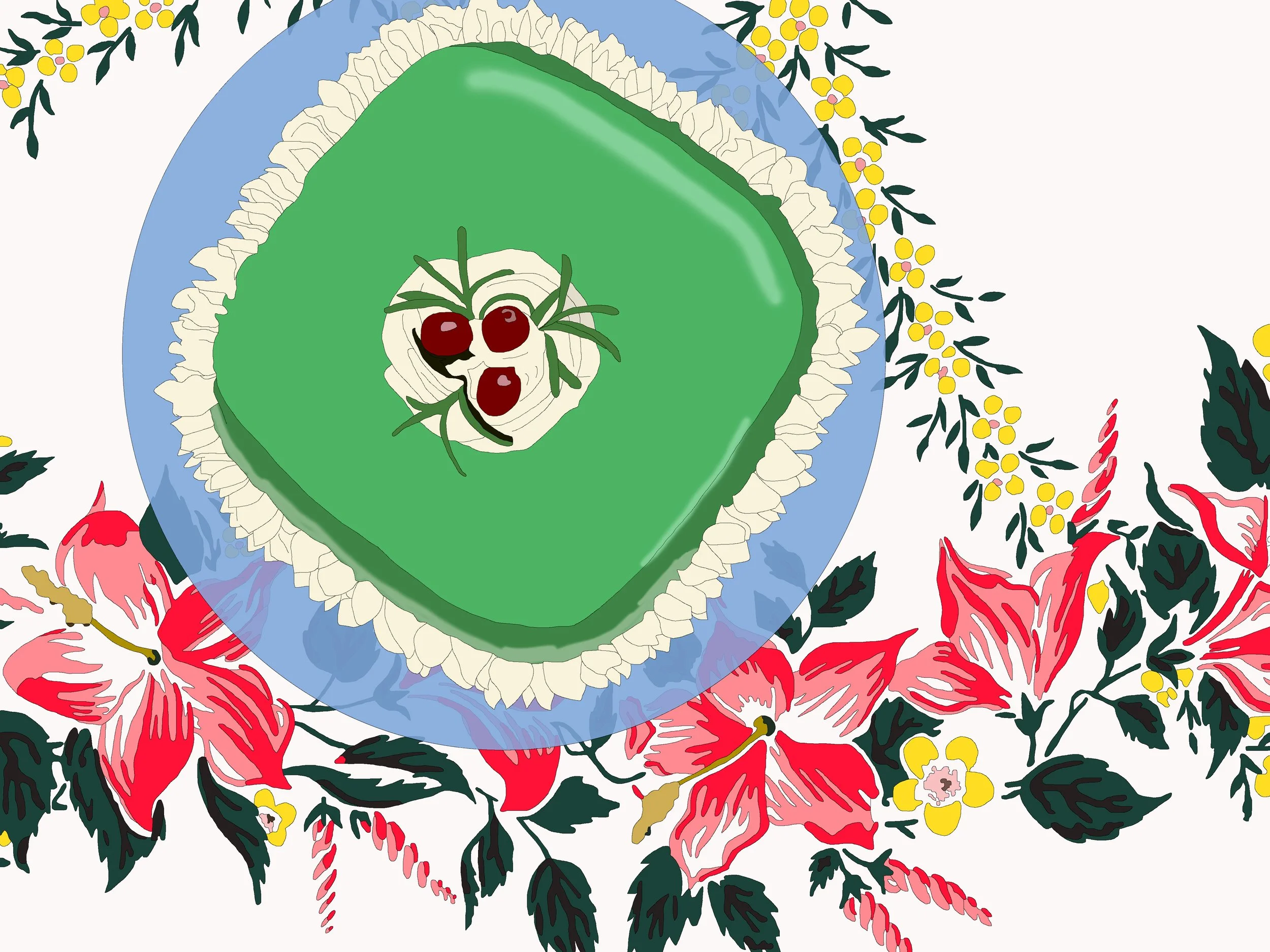
“Swung Form”
Marge Dean. Ink on canvas, 2026
'There are no rights and wrongs. The more you meet a challenge, the more your potential may become. The one rule is that there may be no rules! The only thing you are accountable for is what you do and what you make with it and the good things sometimes are a hazard and the bad things attributes… I think the minute I see a rule or a direction or a method or an introduction to success in some direction, I’m quick to leave it. . . The idea of satisfaction is a little like the idea of happiness. It’s the great American illusion.' —D. Smith, interview with Thomas B. Hess, 1964